Aeropress Instructions PDF: A Comprehensive Guide
Discover readily available‚ free printable Aeropress instructions in PDF format‚ alongside comprehensive brewing guides detailing various methods for optimal coffee extraction.
Understanding the Aeropress and its Components
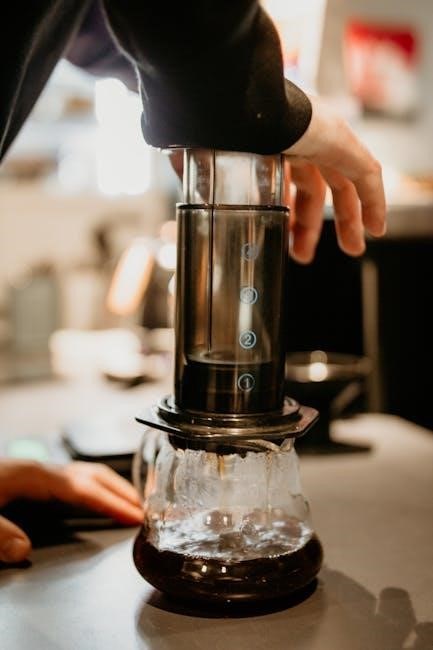
The Aeropress is a remarkably versatile manual coffee maker celebrated for its speed‚ portability‚ and ability to produce smooth‚ rich coffee. It fundamentally consists of three main parts: the chamber‚ the plunger‚ and the filter cap. The chamber is where the ground coffee and hot water combine for brewing.
The plunger‚ when pressed down‚ forces the coffee through the filter. Filters can be paper or reusable metal‚ impacting the final brew’s clarity and body. The filter cap screws onto the chamber‚ securely holding the filter in place during the brewing process. Understanding how these components interact is crucial for mastering Aeropress techniques. Different brewing methods‚ like standard and inverted‚ utilize these parts in unique ways to control extraction and flavor.
Locating and Downloading Official Aeropress Instructions (PDF)
Finding the official Aeropress instructions in PDF format is straightforward. The primary source is the Aeropress website itself‚ offering downloadable guides for various models and brewing preferences. Numerous websites also host these PDFs‚ providing convenient access for users. A quick online search for “Aeropress instructions PDF” yields multiple results‚ including links to printable versions.
These guides typically encompass step-by-step instructions‚ diagrams illustrating the brewing process‚ and troubleshooting tips. Beyond the official documentation‚ many coffee enthusiasts and online communities share their own detailed guides and recipes‚ often available as downloadable PDFs. Ensure the source is reputable to guarantee accuracy and safety when following brewing instructions.
Standard Aeropress Brewing Method ౼ Step-by-Step
Begin by heating water to around 175°F (80°C). Insert a paper filter into the Aeropress cap and rinse with hot water to eliminate paper taste. Add finely-ground coffee – typically 17 grams – into the brewing chamber. Pour hot water over the grounds‚ filling to the desired level‚ usually around the ‘1’ or ‘2’ mark.
Stir gently for 10 seconds to ensure even saturation. Insert the plunger and press down slowly and steadily‚ taking approximately 20-30 seconds to complete. This creates a concentrated coffee brew. Add hot water to dilute to your preferred strength‚ enjoying a smooth and flavorful cup. Detailed visual guides are often found within downloadable PDF instructions.
Inverted Aeropress Brewing Method ౼ Step-by-Step
Start by inserting the plunger into the Aeropress chamber‚ stopping just below the ‘4’ mark. Flip the Aeropress upside down‚ resting it securely on a stable surface. Add finely-ground coffee – around 17 grams – into the chamber. Pour hot water (around 175°F/80°C) over the grounds‚ filling to your desired level.
Gently stir for 10 seconds to ensure complete saturation. Allow the coffee to steep for 60-90 seconds‚ depending on your preference. Carefully attach the filter cap with a pre-wetted filter. Quickly and carefully flip the Aeropress onto your mug and press down slowly and steadily. PDF guides often illustrate this process visually for clarity.

Key Factors Affecting Aeropress Coffee Quality
Optimal coffee quality hinges on grind size‚ water temperature‚ and the coffee-to-water ratio – details frequently outlined within downloadable Aeropress instruction PDFs.
Coffee Grind Size for Aeropress
Determining the ideal coffee grind size is crucial for Aeropress brewing‚ and detailed guidance is often found within Aeropress instruction PDFs. Generally‚ a medium-fine grind – finer than for a French Press‚ but coarser than for espresso – yields the best results.
However‚ experimentation is key! Finer grinds increase extraction‚ potentially leading to bitterness if over-extracted. Coarser grinds result in under-extraction and a weaker‚ sour brew. Many downloadable guides suggest starting with a medium-fine grind and adjusting based on taste.
PDF resources often illustrate grind size comparisons‚ helping users visually assess the appropriate consistency. Remember that burr grinders provide a more consistent grind than blade grinders‚ significantly impacting coffee quality. Following the recommendations within the official or supplemental PDFs will help you dial in your perfect Aeropress brew.
Water Temperature for Optimal Extraction
Aeropress instruction PDFs consistently emphasize the importance of water temperature for achieving optimal coffee extraction. While boiling water (212°F / 100°C) is often used‚ many guides recommend allowing the water to cool slightly – to around 175-185°F (80-85°C) – especially for lighter roasts.
Higher temperatures extract more quickly‚ potentially leading to bitterness with darker roasts or prolonged brewing times. Lower temperatures may result in under-extraction and a sour taste. Detailed PDFs often provide temperature charts based on roast level and desired brew strength.
Using a thermometer is highly recommended for precision. Some advanced guides within downloadable resources suggest experimenting with different temperatures to fine-tune the flavor profile. Consistent temperature control‚ as detailed in the instructions‚ is vital for repeatable‚ delicious Aeropress coffee.
Coffee-to-Water Ratio: Finding Your Preference
Aeropress instruction PDFs highlight that the coffee-to-water ratio is a key variable in controlling brew strength. A common starting point is a 1:15 ratio (e.g.‚ 15 grams of coffee to 225 grams of water)‚ but this is merely a suggestion.
Many downloadable guides encourage experimentation to discover personal preferences. Increasing the coffee amount relative to water yields a stronger‚ more concentrated brew‚ while decreasing it results in a lighter‚ more delicate cup.
Detailed PDFs often include ratio tables and recommendations for different coffee types and desired outcomes. Some resources suggest starting with the standard ratio and adjusting incrementally‚ noting the impact on flavor. Ultimately‚ the ideal ratio is subjective and best determined through personal tasting and refinement‚ as emphasized in the instructions.

Troubleshooting Common Aeropress Issues
PDF guides address issues like stuck plungers‚ bitter tastes‚ or weak brews‚ offering solutions and adjustments to brewing parameters for optimal results.
Stuck Plunger: Causes and Solutions
Encountering a stuck Aeropress plunger is a common frustration‚ often stemming from a vacuum created during brewing. PDF instructions highlight several causes‚ including a too-fine coffee grind‚ insufficient water‚ or pressing too quickly.
Solutions detailed in downloadable guides suggest gently stirring the slurry to break the vacuum‚ slightly loosening the chamber from the cup‚ or carefully applying more pressure while ensuring a stable base.
Furthermore‚ some resources recommend pre-wetting the filter to improve water flow and prevent sticking. Always refer to the official Aeropress PDF for detailed diagrams and troubleshooting steps‚ ensuring safe and effective plunger operation. Avoiding excessive force is crucial to prevent damage to the device.
Bitter Coffee: Identifying and Correcting the Problem
Bitter Aeropress coffee often indicates over-extraction‚ a common issue addressed in downloadable PDF guides. These resources pinpoint several culprits: excessively fine grind size‚ water that’s too hot‚ or an overly long brew time.
Corrective measures‚ as outlined in the instructions‚ include using a coarser grind‚ lowering the water temperature (ideally between 175-185°F)‚ and shortening the steep time.
Additionally‚ experimenting with a lower coffee-to-water ratio can reduce bitterness. The official Aeropress PDF provides detailed charts and recommendations for dialing in your brew. Remember‚ consistent adjustments based on taste are key to achieving a balanced‚ flavorful cup.
Weak Coffee: Adjusting for Stronger Brews
If your Aeropress coffee lacks intensity‚ downloadable PDF instructions suggest under-extraction is likely the cause. This often stems from a grind that’s too coarse‚ water temperature being too low‚ or insufficient brew time.
To rectify this‚ consult the PDF guides for recommended adjustments: switch to a finer grind‚ increase water temperature (without exceeding 205°F)‚ and extend the steep time.
Furthermore‚ increasing the coffee-to-water ratio will naturally yield a stronger brew. The official Aeropress documentation offers detailed guidance on finding your ideal ratio. Experimentation‚ guided by the PDF‚ is crucial for achieving a robust and satisfying coffee experience.

Advanced Aeropress Techniques
Explore bypass brewing‚ filter variations (paper vs. metal)‚ and diverse Aeropress recipes detailed in downloadable PDF guides for enhanced control and flavor.

Bypass Brewing for Increased Control
Bypass brewing‚ a technique highlighted in advanced Aeropress guides‚ allows for greater control over the final coffee strength and flavor profile. This method involves brewing a concentrated Aeropress coffee and then diluting it with hot water after brewing is complete.
PDF resources demonstrate how to brew a smaller volume of coffee with the Aeropress‚ then add hot water to reach your desired strength. This differs from adjusting the coffee-to-water ratio during the initial brewing phase.
The benefit lies in precise adjustments; you can fine-tune the brew to your exact preference without re-brewing. Detailed instructions within downloadable guides explain the optimal water temperature for dilution and how to achieve a balanced cup‚ offering a level of customization beyond standard Aeropress methods.
Using Different Filters (Paper vs. Metal)
Aeropress instructions PDFs frequently address the impact of filter choice – paper versus metal – on the final brew. Paper filters‚ the standard inclusion‚ produce a cleaner cup by trapping more sediment and oils‚ resulting in a brighter‚ more refined flavor profile. Downloadable guides detail proper rinsing to eliminate paper taste.
Metal filters‚ often purchased separately‚ allow more oils and micro-grounds to pass through‚ creating a fuller-bodied‚ richer coffee experience.
PDF resources explain that metal filters can enhance the mouthfeel and complexity of the coffee‚ but may require a coarser grind to avoid sediment. Choosing between the two depends on personal preference and desired flavor characteristics‚ with many guides offering comparative brewing recommendations.
Aeropress Recipes: Exploring Variations

Aeropress instructions PDFs often extend beyond basic brewing to showcase a diverse range of recipes. These downloadable guides frequently feature variations in coffee-to-water ratios‚ grind sizes‚ and brew times‚ catering to different taste preferences. Many resources highlight recipes inspired by world barista championships‚ demonstrating the Aeropress’s versatility.
You’ll find recipes for everything from espresso-style concentrated brews to longer‚ Americano-like extractions.
PDFs often include detailed notes on adjusting parameters to fine-tune the brew‚ encouraging experimentation. Exploring these recipes allows users to unlock the Aeropress’s full potential and discover unique flavor profiles beyond the standard brewing method‚ enhancing their coffee experience.

Cleaning and Maintenance of Your Aeropress
Aeropress instructions PDFs emphasize quick disassembly and cleaning after each use‚ ensuring longevity and preventing coffee oil buildup for optimal performance.
Disassembling and Cleaning the Aeropress
Aeropress instructions PDFs consistently highlight the simplicity of cleaning this brewing device. Begin by ejecting the used coffee puck by pressing the plunger fully through the chamber; this creates a convenient “hockey puck” for disposal. Next‚ detach the chamber from the plunger by twisting and pulling.
Rinse all components – the chamber‚ plunger‚ filter cap‚ and filter holder – with warm water. Avoid abrasive cleaners‚ as they can damage the plastic. The filter cap can be disassembled for a more thorough cleaning. Periodically‚ a deeper clean with mild dish soap is recommended‚ ensuring all parts are rinsed completely to remove any soap residue. Proper and regular cleaning‚ as detailed in the provided PDFs‚ maintains optimal flavor and extends the Aeropress’s lifespan.
Proper Storage to Extend Aeropress Lifespan
Aeropress instructions PDFs emphasize that correct storage contributes significantly to the longevity of your brewer. After thorough cleaning and drying – crucial to prevent mold or mildew – store the Aeropress disassembled. This prevents pressure from being constantly applied to the rubber seal on the plunger‚ potentially extending its life.
Avoid storing the Aeropress in direct sunlight or extreme temperatures‚ as these can degrade the plastic components. A cool‚ dry place is ideal. Keeping all parts together in the original packaging‚ or a dedicated container‚ minimizes the risk of loss or damage. Following these simple storage guidelines‚ as outlined in the official documentation‚ ensures years of reliable brewing.
Aeropress vs. Other Brewing Methods
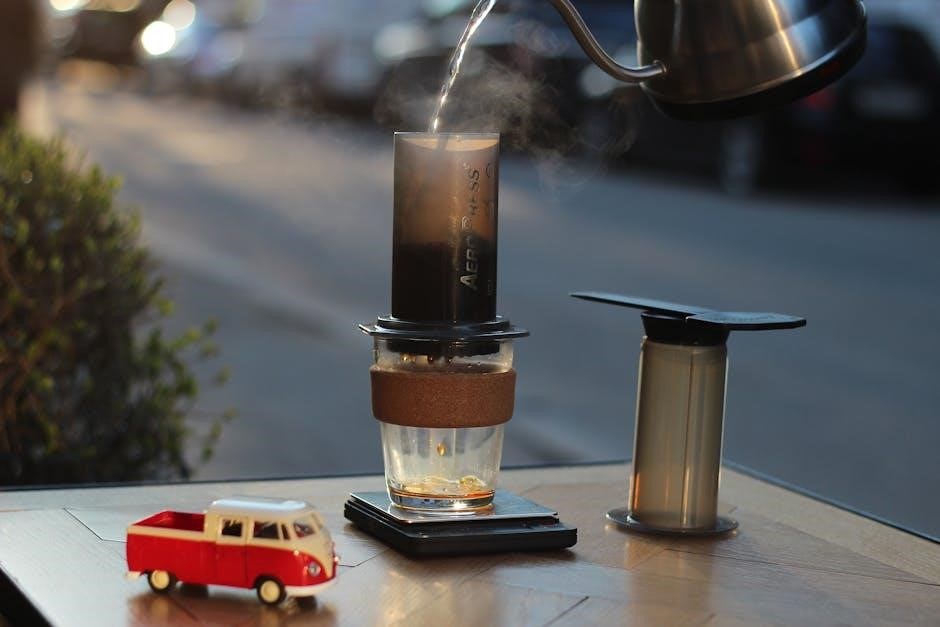
Comparing the Aeropress to French Press‚ pour-over methods‚ and others reveals its unique advantages in portability‚ speed‚ and versatility‚ as detailed in guides.
Aeropress vs. French Press: A Comparison
Both the Aeropress and French Press deliver full-bodied coffee‚ but differ significantly in brewing process and resulting cup profile. French Presses utilize immersion brewing with a metal filter‚ allowing more oils and sediment into the final brew‚ creating a heavier mouthfeel. Conversely‚ the Aeropress employs pressure to force coffee through a paper or metal filter.
This pressure results in a cleaner‚ brighter cup with less sediment. Aeropress brewing is generally faster and more versatile‚ allowing for experimentation with grind size‚ water temperature‚ and brew time. Cleaning a French Press can be more cumbersome than disassembling and rinsing the Aeropress. PDF guides often highlight the Aeropress’s portability as a key advantage over the glass carafes of French Presses‚ making it ideal for travel and outdoor adventures.
Aeropress vs. Pour Over (Hario V60‚ Chemex)
Compared to pour over methods like Hario V60 or Chemex‚ the Aeropress offers a distinct brewing experience. Pour over relies on gravity and a slow‚ controlled pour‚ emphasizing clarity and nuanced flavors. These methods typically require more precision and technique for consistent results. Aeropress‚ however‚ utilizes immersion and pressure‚ yielding a different flavor profile – often bolder and with more body.
PDF instructions frequently showcase the Aeropress’s speed and ease of use as advantages over the more deliberate pour over process. While pour over excels at highlighting delicate coffee characteristics‚ the Aeropress is more forgiving and adaptable. Cleanup is also simpler with the Aeropress. Both brewing styles are popular‚ but cater to different preferences regarding flavor complexity and brewing control.
Aeropress for Travel: Portability and Convenience
The Aeropress shines as an ideal travel companion for coffee enthusiasts. Its compact size and durable construction‚ detailed in many downloadable PDF guides‚ make it exceptionally portable. Unlike bulkier brewing methods‚ the Aeropress easily fits into luggage without taking up significant space. This convenience allows for enjoying quality coffee anywhere – hotels‚ campsites‚ or offices.
PDF instructions often highlight the Aeropress’s self-contained nature; requiring minimal accessories for operation. No need for electricity or fragile glass components. The Aeropress’s robust design withstands travel conditions‚ ensuring consistent performance. Its ease of cleaning further enhances its travel-friendliness. For those seeking a reliable and convenient coffee solution on the go‚ the Aeropress is a superb choice;
Resources and Further Learning
Explore the official Aeropress website for support‚ alongside vibrant online communities and forums‚ offering diverse brewing tips and downloadable PDF guides.
Official Aeropress Website and Support
The official Aeropress website serves as a primary resource for all things Aeropress‚ offering a wealth of information directly from the source. You’ll find detailed brewing guides‚ frequently asked questions‚ and troubleshooting tips to enhance your coffee-making experience. Crucially‚ downloadable PDF versions of the Aeropress instruction manual are readily available‚ ensuring you always have access to the latest guidance‚ even without an internet connection.
Beyond the instructions‚ the website showcases innovative recipes and techniques contributed by Aeropress enthusiasts worldwide. Direct support channels are also provided‚ allowing users to contact the Aeropress team with specific questions or concerns. This dedicated support ensures a positive user experience and helps resolve any issues quickly and efficiently‚ making it an invaluable resource for both beginners and experienced Aeropress users alike.
Online Aeropress Communities and Forums
Numerous online communities and forums are dedicated to the Aeropress‚ providing a vibrant space for enthusiasts to share tips‚ recipes‚ and troubleshooting advice. These platforms often host downloadable PDF guides compiled by experienced users‚ supplementing the official instructions with alternative brewing methods and personalized techniques.
Engaging with these communities allows you to learn from others’ experiences‚ discover innovative approaches to Aeropress brewing‚ and find solutions to common challenges. Many forums feature dedicated threads for discussing specific aspects of the Aeropress‚ including grind size‚ water temperature‚ and filter types. Sharing your own experiences and seeking advice from fellow Aeropress lovers can significantly elevate your coffee-making skills and enjoyment.