The Vinci Code PDF: A Comprehensive Guide
The Da Vinci Code, a thrilling mystery, frequently appears as a sought-after PDF download. Its intricate plot, involving symbology and historical puzzles, captivates readers globally, fueling demand for accessible digital copies.
What is “The Da Vinci Code”?
The Da Vinci Code, penned by Dan Brown and published in 2003, rapidly ascended to become a global literary phenomenon. It’s a meticulously crafted mystery thriller that intertwines art, history, and cryptography, centering around a murder investigation within the Louvre Museum in Paris. The narrative swiftly pulls in Robert Langdon, a Harvard symbologist, and Sophie Neveu, a French cryptologist, as they unravel a complex conspiracy.
At its core, the novel challenges conventional understandings of religious history, specifically concerning Jesus Christ and Mary Magdalene. Brown presents a controversial theory suggesting a lineage extending from Jesus through Magdalene, concealed for centuries by a powerful secret society – the Priory of Sion. This premise, coupled with intricate puzzles and historical allusions, sparked widespread debate and captivated millions.
The book’s success isn’t solely attributed to its provocative themes; Brown’s skillful pacing, engaging characters, and incorporation of real art and architectural landmarks contribute significantly to its appeal. The story’s exploration of Leonardo da Vinci’s works, brimming with hidden symbolism, is central to the unfolding mystery, making the artist a pivotal figure within the narrative. Consequently, finding a PDF version became highly desirable for readers worldwide.

The Novel’s Core Premise & Plot Summary
The Da Vinci Code’s central premise revolves around a shocking revelation: the assertion that Jesus Christ and Mary Magdalene were married and had a child, establishing a royal bloodline. This challenges the foundational tenets of the Catholic Church and forms the core of a centuries-old conspiracy orchestrated to suppress this truth.
The plot ignites with the murder of Jacques Saunière, the Louvre’s curator, who leaves behind a cryptic trail of symbols and anagrams. Harvard symbologist Robert Langdon and French cryptologist Sophie Neveu are thrust into a desperate race to decipher these clues, pursued by both the French police and a zealous member of Opus Dei, Silas.
Their investigation leads them on a thrilling chase across Paris and London, uncovering hidden messages within Leonardo da Vinci’s artwork – particularly The Last Supper and The Mona Lisa – and revealing the secrets of the Priory of Sion. The pursuit of the “Holy Grail” isn’t for a physical cup, but for the lineage of Christ, concealed to protect it from those who would destroy it. The availability of a PDF copy allows readers to quickly delve into this complex narrative.

Availability of “The Da Vinci Code” in PDF Format
Finding a PDF version of “The Da Vinci Code” is surprisingly common online, though its legality is often questionable. Numerous websites offer downloadable copies, ranging from legitimate online bookstores providing samples to less scrupulous sites hosting unauthorized reproductions. Search engines readily yield results for “The Da Vinci Code PDF free download,” demonstrating the widespread demand for this format.
However, it’s crucial to exercise caution. Many sites promising free PDFs contain malware, viruses, or lead to phishing scams. Reputable online libraries and digital bookstores sometimes offer excerpts or the complete book for purchase as a PDF. File-sharing platforms also host copies, but accessing them often infringes on copyright laws.
Formats available beyond standard PDF include EPUB, DOC, and TXT, catering to various reading preferences. The ease of accessing a digital copy contributes to the book’s enduring popularity, allowing readers to enjoy the intricate plot on multiple devices.
Legality of Downloading a PDF Copy
Downloading a PDF copy of “The Da Vinci Code” without proper authorization is generally illegal. Copyright law protects the author, Dan Brown, and the publisher from unauthorized reproduction and distribution of their work. Obtaining a PDF from unofficial sources – those not directly authorized by the copyright holder – constitutes copyright infringement.
This applies even if no monetary exchange occurs; simply downloading a pirated PDF is a violation. Websites offering free downloads often operate outside the law and expose users to risks like malware and viruses. Legitimate avenues include purchasing the PDF from authorized online retailers or borrowing it from digital libraries that have licensing agreements.
Copyright holders actively pursue legal action against individuals and websites involved in copyright infringement. A DMCA (Digital Millennium Copyright Act) procedure is often available for reporting infringing content, allowing copyright owners to request its removal. Respecting copyright law ensures authors and publishers are compensated for their creative work.
Reliable Sources for Legal PDF Access
Several reputable online platforms offer legal access to “The Da Vinci Code” in PDF format. Major ebook retailers like Amazon Kindle Store, Barnes & Noble Nook, and Kobo consistently stock digital versions, ensuring a secure and authorized purchase. These platforms employ digital rights management (DRM) to protect the copyright holder’s interests.
Google Play Books is another reliable source, providing convenient access across various devices. Additionally, some public and university libraries offer digital lending services, allowing members to borrow ebooks, including PDF versions of popular titles like Dan Brown’s novel. Checking your local library’s website is a great starting point.

Subscription-based ebook services, such as Scribd, may also include “The Da Vinci Code” in their catalog. Always verify the source’s legitimacy before making a purchase or providing personal information, avoiding websites with suspicious URLs or unclear copyright statements.
Understanding the Significance of Leonardo da Vinci in the Novel

Leonardo da Vinci’s presence permeates “The Da Vinci Code,” extending far beyond mere artistic representation. He’s portrayed not simply as a painter, but as a brilliant polymath, a master of science, invention, and hidden symbolism, deeply connected to the Priory of Sion’s secrets. His artworks, particularly The Last Supper and the Mona Lisa, serve as intricate puzzles, concealing clues vital to the novel’s central mystery.
The novel posits that da Vinci deliberately embedded coded messages within his paintings, utilizing symbolism and anatomical precision to reveal suppressed truths about religious history. These hidden elements relate to the alleged marriage of Jesus Christ and Mary Magdalene, and the subsequent lineage they established.
Da Vinci’s expertise in anatomy, geometry, and cryptography becomes crucial for deciphering the clues left behind, making him a pivotal figure in the quest to uncover the truth. His legacy, as presented in the book, is one of a protector of ancient knowledge and a challenger to established dogma.

Key Symbols and Codes Explored in “The Da Vinci Code”
“The Da Vinci Code” thrives on a complex web of symbols and codes, demanding decipherment by both the characters and the reader. The PDF versions often highlight these elements, encouraging closer inspection. Central to the narrative is the golden ratio, frequently appearing in da Vinci’s artwork and architectural designs, representing divine proportion and hidden patterns.
Anagrams play a crucial role, serving as linguistic puzzles that unlock vital clues. Jacques Saunière’s coded messages, constructed through letter rearrangements, propel the plot forward. The fleur-de-lis, a stylized lily, symbolizes both French royalty and a hidden representation of the sacred feminine.
Furthermore, the pentagram, often associated with paganism, is reinterpreted as a symbol of divine femininity and the goddess. The novel explores the significance of sacred geometry, numerology, and the interplay between art, religion, and secret societies, all interwoven to reveal a concealed history.
The Role of the Priory of Sion
Within “The Da Vinci Code,” the Priory of Sion emerges as a secretive society dedicated to protecting a profound historical truth – the lineage of Jesus Christ and Mary Magdalene. PDF versions of the novel often emphasize the Priory’s historical claims, sparking debate among readers. The organization, allegedly founded in 1099, served as a guardian of ancient knowledge, shielding it from those who would suppress it.
The Priory’s purpose, as depicted in the book, is to preserve the Merovingian dynasty, believed to be descendants of Jesus and Mary. They operate in the shadows, employing coded messages and symbolic representations to maintain their secrecy. Key figures, like Jean-Luc Picard and others, are presented as Grand Masters, safeguarding the sacred bloodline.
The novel portrays the Priory as a counterforce to the Catholic Church, challenging established doctrines and revealing a hidden history. Their influence extends through art, architecture, and secret societies, leaving a trail of clues for those willing to decipher them.
Jacques Saunière and the Louvre Museum Connection
Jacques Saunière, the Louvre’s curator, initiates the central mystery in “The Da Vinci Code.” PDF copies of the book highlight his meticulously planned death, staged as a murder to trigger a complex investigation. Saunière, a Grand Master of the Priory of Sion, utilizes the Louvre Museum as a vast, symbolic chessboard, embedding clues within its artwork and architecture;
His final act involves arranging a series of puzzles and anagrams, designed to be deciphered by Robert Langdon and Sophie Neveu. The Louvre, with its rich history and artistic treasures, becomes a crucial setting for the unfolding narrative. Saunière’s deep knowledge of art history and symbology is instrumental in creating these intricate challenges.
The museum’s galleries transform into a labyrinth of hidden messages, revealing secrets about the Holy Grail and the true nature of Christianity. Saunière’s connection to the Louvre is not merely professional; it’s deeply intertwined with the Priory’s mission to protect a sacred truth.
Robert Langdon’s Character and Expertise
Robert Langdon, a Harvard symbologist, is the protagonist thrust into the whirlwind of events in “The Da Vinci Code.” PDF versions of the novel showcase his unique skillset – a profound understanding of art, iconography, and hidden symbolism – which proves essential to unraveling the mysteries presented. He’s summoned to Paris to decipher the cryptic messages left by Jacques Saunière.
Langdon isn’t a detective in the traditional sense; his expertise lies in interpreting the language of symbols, a skill honed through years of academic study. He approaches the investigation with a scholarly mindset, meticulously analyzing clues embedded within famous artworks and historical texts.
His character is defined by intellectual curiosity, a dedication to truth, and a somewhat reluctant heroism. Langdon’s knowledge becomes the key to unlocking the secrets of the Priory of Sion and the Holy Grail, making him a pivotal figure in the narrative’s progression.
Sophie Neveu: Her Lineage and Role
Sophie Neveu, a brilliant cryptologist working for the French Judicial Police, is central to the unfolding mystery in “The Da Vinci Code.” PDF editions reveal her crucial role as the granddaughter of Jacques Saunière, the murdered curator of the Louvre. This lineage immediately casts her as a suspect, but also provides her with unique access to her grandfather’s secrets and the intricate puzzles he left behind.
Sophie’s expertise in cryptography is invaluable, allowing her to decipher the complex codes and anagrams that Saunière employed. She’s resourceful, independent, and possesses a sharp intellect, making her a formidable partner to Robert Langdon.
Her personal connection to the mystery, coupled with her skills, drives the narrative forward. Sophie’s journey is one of self-discovery, as she learns about her family’s hidden history and its connection to the ancient secrets surrounding the Holy Grail.
The Anagrams and Puzzles within the Story
“The Da Vinci Code,” readily available in PDF format, is renowned for its intricate web of anagrams and puzzles. These aren’t merely decorative elements; they are fundamental to the plot, serving as clues that Langdon and Neveu must decipher to unravel the central mystery. Saunière, a master of codes, utilizes anagrams extensively in his final messages, concealing vital information within seemingly innocuous phrases.
The novel’s puzzles extend beyond simple wordplay, incorporating historical symbolism, artistic references – particularly those of Leonardo da Vinci – and mathematical sequences like the Fibonacci sequence. These layers of complexity demand careful observation and a deep understanding of art history and cryptography.
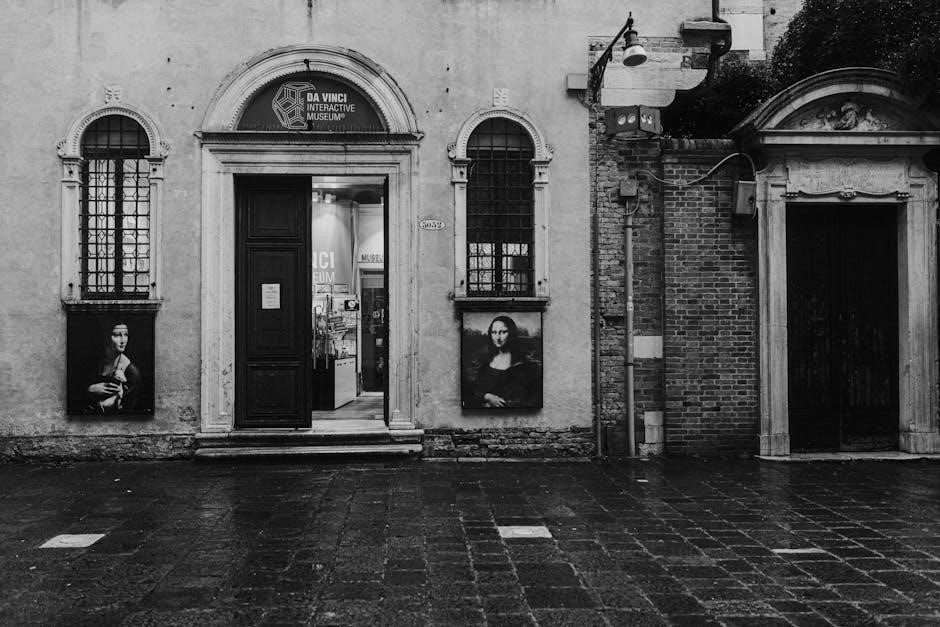
Readers exploring the PDF version can often pause and attempt to solve these puzzles alongside the protagonists, enhancing the immersive experience. The “Knight a Pope Interred” clue exemplifies this, requiring a clever manipulation of words to reveal a hidden location.
The “Knight a Pope Interred” Clue Explained
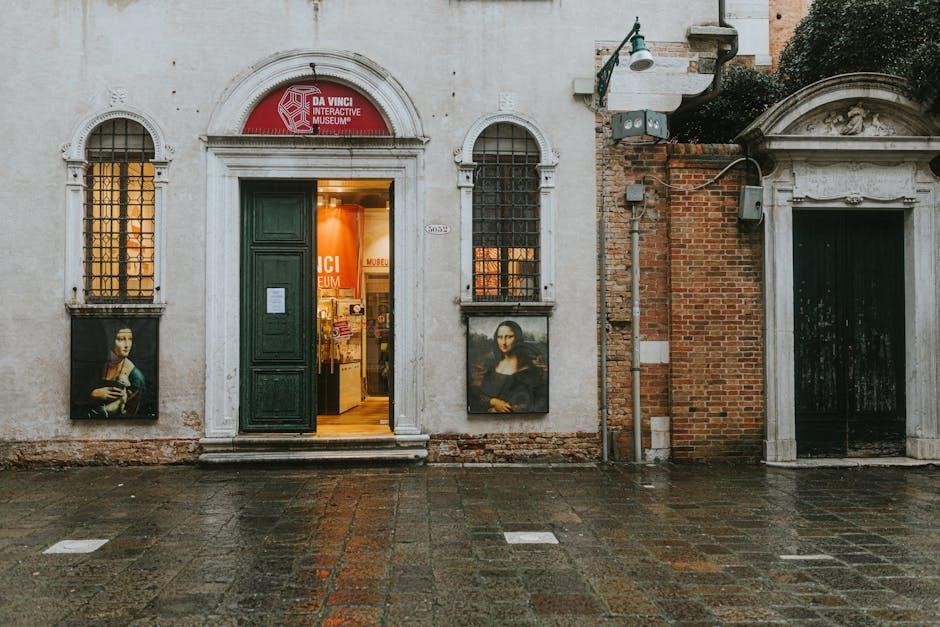
Within the digital pages of “The Da Vinci Code” PDF, the enigmatic clue “In London lies a knight a Pope interred” stands as a pivotal moment. This isn’t a literal statement, but a cleverly constructed anagram. Langdon and Neveu realize the phrase must be rearranged to reveal a hidden location – St. Peter’s Square in London.

The solution hinges on recognizing that “knight” and “Pope” are not subjects, but descriptive elements. Rearranging the words leads to “I knep Tsp,” which, when deciphered, points to Temple Church, London. This church houses the effigy of a knight – a Templar – lying above a tomb traditionally believed to hold the remains of a Pope.
Accessing the PDF allows readers to revisit this crucial scene and attempt the anagram themselves, mirroring the protagonists’ intellectual journey. The clue’s brilliance lies in its multi-layered deception, requiring both linguistic skill and historical knowledge to unlock its secret.
Critical Reception and Controversy Surrounding the Book
The release of “The Da Vinci Code”, and subsequently its widespread availability as a PDF, ignited a firestorm of debate. While commercially triumphant, achieving record-breaking sales, critical reception was markedly divided; Many reviewers praised its page-turning pace and intricate plotting, acknowledging its success in blending thriller elements with historical speculation.
However, the novel faced substantial criticism for its historical inaccuracies and perceived misrepresentation of religious beliefs. Scholars and theologians vehemently contested Brown’s assertions regarding the Priory of Sion, the role of Mary Magdalene, and the historical Jesus. The book was accused of presenting fiction as fact, sparking intense controversy within religious communities.
The PDF format amplified these discussions, allowing for wider dissemination and scrutiny of the novel’s claims. Legal challenges also arose, though ultimately unsuccessful, further cementing the book’s place as a cultural touchstone and a source of ongoing debate.
Impact of “The Da Vinci Code” on Popular Culture
“The Da Vinci Code”, even in its readily available PDF form, profoundly impacted popular culture, extending far beyond the realm of literature. The novel sparked a global fascination with symbology, art history, and conspiracy theories, influencing numerous subsequent works of fiction, film, and television.
Tourism to locations featured in the book, particularly the Louvre Museum in Paris and Rosslyn Chapel in Scotland, experienced a significant surge. The novel’s themes permeated everyday conversations, prompting widespread discussions about religion, history, and the power of secret societies.
The book’s success also popularized the thriller genre, inspiring a wave of similar novels featuring intricate puzzles and historical mysteries. The ease of access provided by PDF downloads further contributed to its cultural saturation, ensuring its enduring legacy as a phenomenon that captivated a global audience and reshaped popular perceptions.

Exploring Related Works by Dan Brown (Lost Symbol, Inferno)
Readers captivated by “The Da Vinci Code”, often initially through PDF versions, frequently explore Dan Brown’s subsequent novels. “The Lost Symbol” continues Robert Langdon’s adventures, delving into the world of Freemasonry and hidden secrets within Washington D.C. It maintains the signature blend of historical research, intricate puzzles, and fast-paced action that defined its predecessor.
“Inferno” transports Langdon to Italy, confronting him with Dante’s Inferno and a global conspiracy linked to overpopulation. Like “The Da Vinci Code”, readily available in PDF format, it relies heavily on art, history, and symbolism to drive the narrative.
These novels share thematic similarities – the pursuit of hidden knowledge, the questioning of established institutions, and the protagonist’s race against time. While each stands alone, they collectively build a universe where art and history conceal dangerous truths, appealing to fans of the original’s intellectual and thrilling qualities.