Forex trading‚ detailed in guides like “Currency Trading For Beginners‚” offers a pathway to potentially profit from global currency fluctuations‚ accessible to newcomers.
Numerous resources‚ including downloadable PDFs‚ aim to demystify this market‚ explaining its basics in simple terms for aspiring traders seeking financial opportunities.
What is Forex Trading?
Forex trading‚ often explained in resources like a “currency trading for dummies pdf‚” involves buying and selling currencies with the goal of profiting from fluctuations in their exchange rates. Unlike stock markets‚ Forex operates 24/5‚ offering continuous trading opportunities across global financial centers.
Essentially‚ traders speculate on whether a currency’s value will increase or decrease relative to another. This decentralized market‚ the largest and most liquid financial market globally‚ doesn’t have a central exchange; instead‚ transactions occur directly between participants.
Beginner guides emphasize understanding currency pairs – like EUR/USD – and how factors like economic indicators and geopolitical events influence their values. It’s a dynamic arena requiring knowledge and strategy.
Why Trade Forex? Advantages Over Other Markets
As detailed in resources like a “currency trading for dummies pdf‚” Forex offers several advantages. Its 24/5 accessibility‚ unlike traditional stock markets with limited hours‚ allows trading flexibility. High liquidity ensures easy entry and exit from positions‚ minimizing slippage.
Furthermore‚ Forex boasts lower transaction costs compared to equities‚ and the potential for profit exists in both rising and falling markets through short-selling. Leverage‚ while risky‚ amplifies potential gains (and losses).
The decentralized nature provides greater market transparency‚ and the wide range of currency pairs offers diverse trading opportunities. These factors contribute to Forex’s appeal for both beginners and experienced traders.

Understanding the Forex Market
A “currency trading for dummies pdf” explains the Forex market’s decentralized global network‚ trading currencies around the clock‚ influenced by economic indicators and policies.
Forex Market Hours and Sessions
A comprehensive “currency trading for dummies pdf” will detail the Forex market’s unique 24/5 operational schedule‚ stemming from its global nature. Trading doesn’t occur during weekends. The market is divided into four primary sessions: Sydney‚ Tokyo‚ London‚ and New York.
Each session exhibits varying levels of liquidity and volatility. The Sydney session typically sees lower volume‚ while Tokyo’s offers increased activity. The London session is often the busiest‚ with significant participation from European banks and traders. Finally‚ the New York session overlaps with London‚ creating peak volatility and trading opportunities. Understanding these sessions‚ as outlined in introductory guides‚ is crucial for timing trades and maximizing potential profits‚ considering currency pair behavior shifts during each period.
Major Currency Pairs (EUR/USD‚ USD/JPY‚ GBP/USD‚ etc.)
A “currency trading for dummies pdf” emphasizes the importance of understanding major currency pairs. These are the most frequently traded‚ offering tighter spreads and higher liquidity. The EUR/USD (Euro/US Dollar) is consistently the most liquid‚ followed by USD/JPY (US Dollar/Japanese Yen) and GBP/USD (British Pound/US Dollar).
These pairs are often favored by beginners due to their predictability and ample trading volume. Other significant pairs include AUD/USD (Australian Dollar/US Dollar) and USD/CHF (US Dollar/Swiss Franc). Guides explain that analyzing these pairs involves considering the economic factors influencing both currencies‚ providing a solid foundation for building a trading strategy and understanding market dynamics.

Key Forex Terminology
A “currency trading for dummies pdf” clarifies essential terms like pips‚ lot sizes‚ leverage‚ and margin – crucial for understanding Forex mechanics and risk management.
What is a Pip?
Understanding “pips” is fundamental‚ as explained in resources like a “currency trading for dummies pdf”. A pip‚ or “percentage in point‚” represents the smallest incremental price movement in a currency pair. For most pairs‚ it’s the fourth decimal place (e.g.‚ 0.0001).
However‚ for pairs involving the Japanese Yen (JPY)‚ a pip is the second decimal place (e.g.‚ 0.01). The value of a pip varies based on the currency pair and lot size traded.
Calculating pip value is essential for determining potential profit or loss. A pdf guide will often demonstrate this with examples‚ showing how to convert pips into monetary value based on your position size. Mastering this concept is vital for effective risk assessment and trade management.
Lot Sizes: Standard‚ Mini‚ Micro
A “currency trading for dummies pdf” will invariably cover lot sizes‚ crucial for managing exposure. Lot sizes determine the volume of currency you’re trading. A standard lot equals 100‚000 units of the base currency‚ representing significant risk and potential reward.

Mini lots are 10‚000 units‚ offering a smaller position size for more controlled trading. Micro lots‚ at 1‚000 units‚ are ideal for beginners or those with limited capital‚ allowing practice with minimal risk.
Understanding how lot sizes impact pip value is key. Larger lots amplify both profits and losses. Guides often illustrate this‚ helping traders choose a lot size aligned with their risk tolerance and trading strategy.
Leverage and Margin Explained
A “currency trading for dummies pdf” will dedicate significant space to leverage and margin‚ often misunderstood concepts. Leverage allows traders to control a larger position with a smaller amount of capital‚ magnifying both potential profits and losses. For example‚ 50:1 leverage means controlling $50‚000 with $1‚000.
Margin is the collateral required to open and maintain a leveraged position. It’s expressed as a percentage of the total position value. Insufficient margin can trigger a margin call‚ forcing position closure.
Guides emphasize responsible leverage use. While it amplifies gains‚ it also dramatically increases risk. Understanding margin requirements and managing risk are paramount for successful Forex trading.

Forex Trading Strategies for Beginners
“Currency Trading for Dummies” PDFs often detail beginner strategies like trend following and breakout trading‚ emphasizing disciplined approaches to market analysis.
Trend Following Strategies
Trend following‚ a cornerstone strategy detailed in resources like “Currency Trading for Dummies‚” involves identifying the direction of a currency pair’s momentum and capitalizing on its continuation. These guides often emphasize using technical indicators – moving averages‚ trendlines‚ and MACD – to confirm trend direction and potential entry/exit points.
Beginners learn to avoid “fighting the trend‚” instead seeking opportunities to trade with the prevailing market force. Successful trend following requires patience‚ as signals can be infrequent‚ and a commitment to risk management‚ utilizing stop-loss orders to protect capital during unexpected reversals. PDFs frequently illustrate examples of identifying uptrends and downtrends‚ and how to implement appropriate trading positions.
Furthermore‚ understanding different timeframes – from short-term scalping to long-term investing – is crucial for adapting trend-following strategies to individual risk tolerance and trading styles.
Breakout Trading Strategies
Breakout strategies‚ frequently covered in “Currency Trading for Dummies” guides‚ focus on identifying key price levels – resistance and support – and trading when the price decisively breaches these barriers. These resources explain that breakouts signal potential strong momentum shifts‚ offering opportunities for quick profits.
Beginners learn to confirm breakouts with increased volume‚ indicating genuine market interest‚ and to avoid “false breakouts” using candlestick patterns or other technical indicators. PDFs often showcase chart examples illustrating successful breakout trades‚ emphasizing the importance of setting profit targets and stop-loss orders immediately after entry.
Effective breakout trading requires swift execution and a disciplined approach to risk management‚ as price movements can be volatile following a breakout.
Scalping Techniques
Scalping‚ a high-frequency trading style detailed in resources like “Currency Trading for Dummies‚” aims to profit from small price changes‚ often holding positions for mere seconds or minutes. These guides emphasize the need for quick decision-making and precise execution‚ utilizing tight spreads and high leverage.
PDFs dedicated to scalping often highlight the importance of focusing on highly liquid currency pairs‚ like EUR/USD‚ and employing technical indicators – moving averages‚ RSI‚ and stochastic oscillators – to identify fleeting opportunities. Risk management is paramount; scalpers typically use tight stop-loss orders to limit potential losses.
Success requires discipline‚ a robust trading platform‚ and the ability to remain calm under pressure.

Risk Management in Forex Trading
“Currency Trading for Dummies” emphasizes crucial risk controls: stop-loss orders‚ take-profit levels‚ and careful position sizing to protect your trading capital.
Stop-Loss Orders: Protecting Your Capital
Stop-loss orders‚ a cornerstone of risk management detailed in resources like “Currency Trading for Dummies‚” are pre-set instructions to automatically close a trade when the price reaches a specified level.
This vital tool limits potential losses‚ safeguarding your trading capital against unexpected market movements. Determining appropriate stop-loss levels requires considering market volatility‚ support and resistance levels‚ and your individual risk tolerance.
Placing a stop-loss too close to the entry price risks premature activation‚ while a wider stop-loss exposes you to greater potential losses.
Effectively utilizing stop-loss orders is paramount for long-term success in Forex trading‚ enabling disciplined risk control and preservation of funds.
Take-Profit Orders: Securing Profits
Take-profit orders‚ frequently explained in guides like “Currency Trading for Dummies‚” automatically close a trade when the price reaches a predetermined profit target‚ removing emotional decision-making.
These orders are crucial for locking in gains and preventing the potential for profits to erode due to market reversals. Setting realistic take-profit levels involves analyzing chart patterns‚ identifying resistance levels‚ and considering your risk/reward ratio.
While aiming for substantial profits is tempting‚ it’s often prudent to secure smaller‚ consistent gains rather than risking a larger profit by holding onto a trade for too long.
Utilizing take-profit orders contributes to a disciplined trading approach and helps maximize profitability over time.
Position Sizing and Risk/Reward Ratio
Position sizing‚ a core concept detailed in resources like “Currency Trading for Dummies‚” determines the appropriate trade volume based on your account balance and risk tolerance‚ safeguarding your capital.
Crucially linked is the risk/reward ratio – comparing potential profit to potential loss. A common guideline suggests aiming for a ratio of at least 1:2‚ meaning you risk $1 to potentially earn $2.
Proper position sizing prevents a single losing trade from significantly impacting your account‚ while a favorable risk/reward ratio ensures long-term profitability.
Beginners should start with small positions and gradually increase them as their understanding and confidence grow‚ always prioritizing risk management.

Forex Trading Tools and Platforms
Forex platforms‚ like MetaTrader 4 (MT4) and MT5‚ are essential tools‚ often covered in “Currency Trading for Dummies‚” for executing trades and analysis.
Choosing a Forex Broker
Selecting a Forex broker is a crucial first step‚ thoroughly discussed in resources like “Currency Trading for Dummies.” Beginners should prioritize brokers with globally recognized licenses‚ ensuring a secure trading environment. Octa‚ for example‚ is highlighted as a reputable option facilitating entry for novice traders.
Consider factors beyond licensing‚ including trading fees – the EUR/USD pair often boasts the lowest – and the platform’s user-friendliness. A broker offering educational materials and demo accounts is invaluable for practice. Research minimum deposit requirements and available currency pairs.
Reliable customer support is also paramount. Carefully evaluate the broker’s reputation and read reviews before committing funds‚ ensuring they align with your trading style and goals.
MetaTrader 4 (MT4) and MetaTrader 5 (MT5)
MetaTrader 4 (MT4) and MetaTrader 5 (MT5) are dominant platforms in Forex trading‚ frequently covered in introductory guides like “Currency Trading for Dummies.” MT4 remains popular for its simplicity and extensive resources‚ while MT5 offers advanced features and a wider range of financial instruments.
Both platforms provide charting tools‚ technical indicators‚ and automated trading capabilities (Expert Advisors). Beginners benefit from demo accounts to practice strategies without risking capital; Understanding the interface and available tools is key to successful trading.
Choosing between MT4 and MT5 depends on individual needs and broker support; many brokers offer both options.

Analyzing the Forex Market
Forex analysis‚ detailed in resources like “Currency Trading for Dummies‚” involves fundamental economic indicators and technical chart pattern recognition for informed decisions.
Fundamental Analysis: Economic Indicators
Fundamental analysis in Forex‚ as explained in guides like “Currency Trading for Dummies‚” centers on evaluating a currency’s value based on economic factors. Key indicators include Gross Domestic Product (GDP) growth‚ reflecting a nation’s economic health‚ and inflation rates‚ impacting currency purchasing power.
Interest rate decisions by central banks significantly influence currency values; higher rates often attract foreign investment. Employment data‚ such as unemployment rates and non-farm payrolls‚ provide insights into economic strength.
Furthermore‚ political stability‚ government policies‚ and even consumer behavior play crucial roles; Traders analyze these indicators to anticipate currency movements and make informed trading decisions‚ understanding that global economics drive Forex trends.
Technical Analysis: Chart Patterns and Indicators
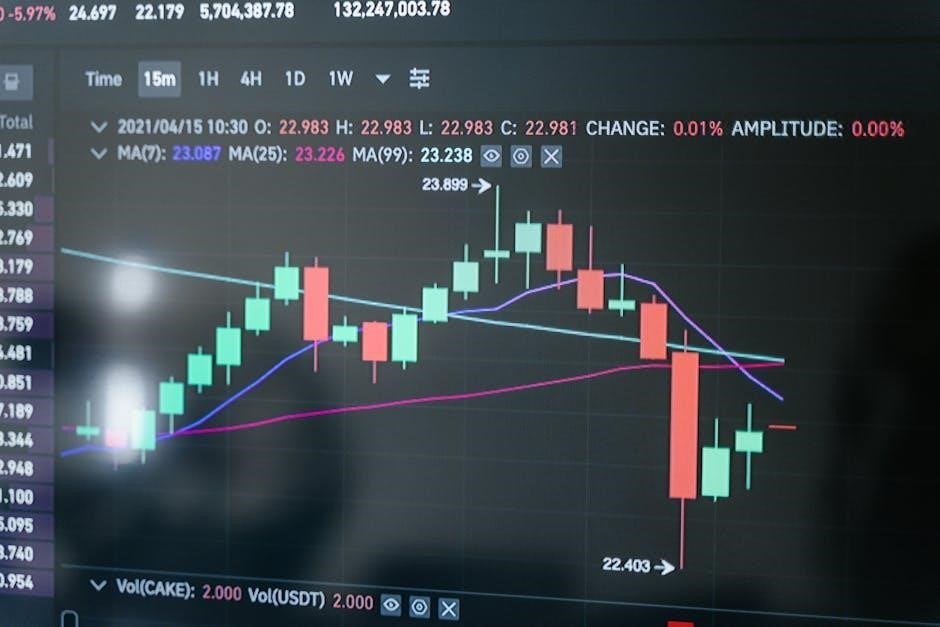
Technical analysis‚ a core component detailed in resources like “Currency Trading for Dummies‚” involves studying historical price charts to identify patterns and predict future movements. Common chart patterns include head and shoulders‚ double tops/bottoms‚ and triangles‚ signaling potential trend reversals or continuations.
Traders utilize various technical indicators to confirm these patterns. Moving averages smooth price data to identify trends‚ while the Relative Strength Index (RSI) gauges overbought or oversold conditions.
Fibonacci retracements help pinpoint potential support and resistance levels. Mastering these tools allows traders to interpret market sentiment and make data-driven decisions‚ complementing fundamental analysis for a holistic approach.

Resources for Further Learning
Numerous Forex books and guides‚ including “Currency Trading for Dummies‚” offer comprehensive education‚ while online courses provide interactive learning experiences for all levels.
Forex Trading Books and Guides
Forex trading literature is abundant‚ catering to all experience levels. A popular starting point is “Currency Trading for Dummies‚” a widely recommended guide simplifying complex concepts. This book‚ often available as a PDF‚ breaks down fundamental and technical analysis‚ risk management‚ and trading psychology.
Other valuable resources include “FOREX TRADING: The Basics Explained in Simple Terms‚” offering a foundational understanding of the market. “The Trading Mastery Academy Series” provides structured learning‚ while books focusing on day trading tactics‚ like “How to Day Trade for a Living‚” delve into advanced strategies.
Investment analysis guides also contribute to a well-rounded understanding‚ helping traders interpret economic indicators and market trends. Exploring these resources‚ particularly the accessible “For Dummies” series‚ is crucial for building a solid Forex trading foundation.
Online Forex Courses and Tutorials
Complementing books like “Currency Trading for Dummies” (often found as a PDF)‚ numerous online courses offer interactive learning experiences. Platforms provide structured curricula‚ covering everything from basic Forex definitions to advanced trading strategies. Many brokers‚ such as Octa‚ offer introductory tutorials designed for novice traders‚ explaining asset selection and initial steps.
These courses frequently incorporate video lessons‚ webinars‚ and simulated trading environments‚ allowing learners to practice risk-free. Resources detail fundamental and technical analysis‚ mirroring the content found in beginner-friendly guides.
Seeking out reputable platforms and utilizing free introductory materials can significantly accelerate the learning process‚ building upon the foundational knowledge gained from resources like the “For Dummies” series.